Last time I looked Alex Bellos was The Guardian's correspondent in Brazil and his one published book was a wonderfully idiosyncratic and entertaining look at Brazilian football (or futebol as the Brazilians would say) which actually turned out to be a pretty good historical and sociological primer for the whole country. Read along with Peter Robb's A Death in Brazil there probably isn't much more that you need to know about this most intriguing (at least to me) country.
So, getting back to the point, I was mildly surprised to find out last year that he had written a book about mathematics called Alex's Adventures in Numberland. However, it turns out he has a degree in philosophy and mathematics (they didn't mention that in the blurb on the football book!) and a boundless enthusiasm for seeking out the quirky and fascinating amongst the numbers and equations.
Starting out with Munduruku people living deep in the Brazilian Amazon who still lead a hunter-gatherer existence and have no words for numbers greater than five. Mainly because, as Alex demonstrates, they don't have any need for them. And even these five numbers aren't a precise match for the quantities one to five translating more correctly into one, two, threeish, fourish and a handful. This leads into a fascinating discussion on how children learn to count and understand numbers. Studying young children and isolated indigenous peoples gives a fascinating insight into innate mathematical intuition compared against taught concepts. (The numerical equivalent of Steven Pinker's The Language Instinct.)
From there we move through number systems, numerology, Vedic mathematics, Pi, algebra, number games, the golden ratio, probability, statistics and on to infinity (the concept not the size of the book ...). He has a journalist's eye for an interesting story and the writing is always clear and intelligent, even when he gets into some fairly high level concepts. Pleasingly, the text is also accompanied by plenty of well-drawn diagrams, illustrations and photos which help with the explanations and let you see what mathematicians really look like. There are also plenty of equations, but what did you expect? It is about maths after all.
Along the way he tracks down some fascinating characters, some well known, most not. For example Wayne Gould, a retired judge from New Zealand who found a Sudoku book in a Tokyo bookshop and although he couldn't read any of the instructions he managed to work out how to solve the puzzle. He then spent six years writing a computer program to generate Sudokus and went on to sell the idea to newspapers in the USA and UK sparking a craze which now has over 100 million regular players. I had always presumed that Sudoku was an ancient Japanese puzzle which was just popularised recently in the West, but it turns out to have been invented by Maki Kaji, a Japanese puzzle-maker who refined a puzzle that he had seen in an American puzzle magazine which had in turn been created by Howard Garns, a retired architect from Indiana.
At 450 pages he covers a lot of ground, but it flys past and I was very sad to see it finish, although my head was hurting a bit by the end. By the last chapter we are up to non-Euclidean geometry, hyperbolic crochet, Georg Cantor's 'set theory' and the Hilbert Hotel. Luckily he also has an excellent blog where he updates some of the stories that appear in the book and any other interesting mathematics that he finds.
Tuesday, February 22, 2011
Sunday, February 20, 2011
Borders, REDGroup and Australian bookselling
In November 2009 I started a post entitled Is Borders evil? so as you may guess the news that they had placed themselves into voluntary administration on Thursday didn't cause too much heartache around here. As a chain-bookshop ex-employee I do feel sorry for the shopfloor staff who now face irate customers with impossible demands and the likely loss of their jobs.
I came to the conclusion that they probably weren't inherently evil as much as incompetently nefarious, so I never did publish the post, but charging well above RRP on about 90% of your stock did seem like a strange strategy for a bookshop looking for customer loyalty and longevity. The half-empty shelves, poor stock selection and lack of key backlist titles over the last few years also seemed to point to some problems with management and strategy.
Around this time the government was also looking into the parallel importation laws and book pricing in general, so there was plenty of media coverage about the disparity between book prices in Australia and those in the USA and UK, but bizarrely there was no coverage anywhere about one of the major book retailing chains over-pricing the vast majority of their stock.
It wasn't always like that, however, when Borders first opened in Carlton in early 2003 it was a well stocked and pleasant spot to browse. I still never bought much there, but occasionally one of their discounted bestsellers like William Gibson's Pattern Recognition or something more esoteric not stocked elsewhere would persuade me to get the credit card out.
Unfortunately in 2007 the Borders US group started getting into difficulties and the UK and Asia Pacific parts of the business were put up for sale. The Australia/NZ side was bought in June 2008 by the REDGroup who are in turn owned by Pacific Equity Partners (PEP), a private equity firm who clearly weren't buying because of a love of literature. The REDGroup already owned the Angus and Robertson chain in Australia and the Whitcoulls chain in New Zealand, so it was fairly obvious that PEP thought they could merge Borders into the existing business, streamline back office functions, maximise profit and sell it on as soon as they could get a good price. (The financial background is explained well in an article in yesterday's Sydney Morning Herald by Michael Evans.)
Straight away you could see the change in the shops: backlist wasn't replaced, shelves got empty, prices went up across the board and non-book products became more and more prominent. I am probably not the average book-buyer, but it wasn't long before I stopped buying anything from them and quickly realised that it wasn't even worth going in to the stores as it would just annoy me.
Not as annoyed, however, as I was when it was revealed soon after the announcement that Border's chairman Steven Cain had written to the government blaming them for the chain's failure because of the overseas internet shopping GST loophole and parallel importation laws. Sure, internet booksellers will have taken a some of Borders market, but the parallel importation laws have very little to do with the problems the REDGroup encountered. For their management to try to shift the blame from their failings to others over two issues which they were well aware of and should have had strategies for dealing with is pathetic in the extreme. It is also telling that Dymocks and other, smaller independent chains, like the ever excellent Readings, can survive in the current climate when they are dealing with exactly the same issues, albeit far more successfully.
Most of the articles about the collapse have made much of the impact of overseas online booksellers like Amazon and Book Depository (some even going so far as to predict that this is the beginning of the end for all shops!) who are undoubtably grabbing a bigger and bigger share of the market in Australia and many have pointed out that the widespread take-up of ebooks will squeeze the bricks-and-mortar bookshops further. Personally, I think that big and bland chains will struggle as more of their custom goes online, but am optimistic that smaller and more customer-focused shops should still be able to thrive. Their role will change slightly as all the bestsellers go digital, but provided they focus on the things that on-line and ebooks can't provide like author events, discussion groups and great customer service then I think they will be all right. Of course they may need a bit of help from the publishers in all of this, but that is another story which can wait for now.
There is bound to plenty more coverage over the coming weeks and the whole industry will be watching intently to see what happens. In the meantime, if you want to know more here are some of the best sources and stories:
John Birmingham – Borders' demise: why the book chains are doomed
Bookseller + Publisher blog – Things we keep repeating
Bookseller + Publisher blog – Round-up of stories on REDGroup entering voluntary administration
And my favourite, Ross Honeywill – How Mark Rubbo killed Borders books
I came to the conclusion that they probably weren't inherently evil as much as incompetently nefarious, so I never did publish the post, but charging well above RRP on about 90% of your stock did seem like a strange strategy for a bookshop looking for customer loyalty and longevity. The half-empty shelves, poor stock selection and lack of key backlist titles over the last few years also seemed to point to some problems with management and strategy.
Around this time the government was also looking into the parallel importation laws and book pricing in general, so there was plenty of media coverage about the disparity between book prices in Australia and those in the USA and UK, but bizarrely there was no coverage anywhere about one of the major book retailing chains over-pricing the vast majority of their stock.
It wasn't always like that, however, when Borders first opened in Carlton in early 2003 it was a well stocked and pleasant spot to browse. I still never bought much there, but occasionally one of their discounted bestsellers like William Gibson's Pattern Recognition or something more esoteric not stocked elsewhere would persuade me to get the credit card out.
Unfortunately in 2007 the Borders US group started getting into difficulties and the UK and Asia Pacific parts of the business were put up for sale. The Australia/NZ side was bought in June 2008 by the REDGroup who are in turn owned by Pacific Equity Partners (PEP), a private equity firm who clearly weren't buying because of a love of literature. The REDGroup already owned the Angus and Robertson chain in Australia and the Whitcoulls chain in New Zealand, so it was fairly obvious that PEP thought they could merge Borders into the existing business, streamline back office functions, maximise profit and sell it on as soon as they could get a good price. (The financial background is explained well in an article in yesterday's Sydney Morning Herald by Michael Evans.)
Straight away you could see the change in the shops: backlist wasn't replaced, shelves got empty, prices went up across the board and non-book products became more and more prominent. I am probably not the average book-buyer, but it wasn't long before I stopped buying anything from them and quickly realised that it wasn't even worth going in to the stores as it would just annoy me.
Not as annoyed, however, as I was when it was revealed soon after the announcement that Border's chairman Steven Cain had written to the government blaming them for the chain's failure because of the overseas internet shopping GST loophole and parallel importation laws. Sure, internet booksellers will have taken a some of Borders market, but the parallel importation laws have very little to do with the problems the REDGroup encountered. For their management to try to shift the blame from their failings to others over two issues which they were well aware of and should have had strategies for dealing with is pathetic in the extreme. It is also telling that Dymocks and other, smaller independent chains, like the ever excellent Readings, can survive in the current climate when they are dealing with exactly the same issues, albeit far more successfully.
Most of the articles about the collapse have made much of the impact of overseas online booksellers like Amazon and Book Depository (some even going so far as to predict that this is the beginning of the end for all shops!) who are undoubtably grabbing a bigger and bigger share of the market in Australia and many have pointed out that the widespread take-up of ebooks will squeeze the bricks-and-mortar bookshops further. Personally, I think that big and bland chains will struggle as more of their custom goes online, but am optimistic that smaller and more customer-focused shops should still be able to thrive. Their role will change slightly as all the bestsellers go digital, but provided they focus on the things that on-line and ebooks can't provide like author events, discussion groups and great customer service then I think they will be all right. Of course they may need a bit of help from the publishers in all of this, but that is another story which can wait for now.
There is bound to plenty more coverage over the coming weeks and the whole industry will be watching intently to see what happens. In the meantime, if you want to know more here are some of the best sources and stories:
John Birmingham – Borders' demise: why the book chains are doomed
Bookseller + Publisher blog – Things we keep repeating
Bookseller + Publisher blog – Round-up of stories on REDGroup entering voluntary administration
And my favourite, Ross Honeywill – How Mark Rubbo killed Borders books
Song for Sunday
The Delgados – No Danger
I can't help but feel vaguely cheated that I haven't seen this before. It isn't surprising that it didn't make it onto CD:UK, but surely there must have been other music shows on UK TV that would have shown something of such total and utter genius? I can highly recommend American Trilogy as well, which seems to feature the Banana Splits on a day trip to Manchester Velodrome.
Band/artist of the week: Mogwai
Song of the week: Mogwai – George Square Thatcher Death Party
Sunday, February 13, 2011
Song for Sunday
Young Galaxy – We Have Everything
Band/artist of the week: The National
Song of the week: On Volcano – Acceleration of Heartbeat
Sunday, February 6, 2011
Song for Sunday
Mogwai – Rano Pano
Fantastic! I hope you are all getting excited about the new album Hardcore Will Never Die, But You Will out a week on Monday. The perfect Valentine gift for the significant other in your life. Trust me ...
Band/artist of the week: Mogwai
Song of the week: On Volcano – Acceleration of Heartbeat
(Song of the week is also completely brilliant and you can download a copy completely free from here.)
Monday, January 31, 2011
Books of 2010
Complete list is in the sidebar way down somewhere on the right. 39 was quite a long way short of my stated goal of one a week. I started well, but quickly tailed off with a too-late surge in the last three months, as you can see from the chart below. This year I am going to aim for 52 again, but suspect that anticipated lack of sleep from late May onwards may make it hard to achieve again.
More worrying, however, as the following graph clearly illustrates is the gap between books read and books acquired. Luckily most of my 2010 Christmas books actually arrived in January, otherwise the gap would have been even more alarming.Top ten is below, with statistics underneath. Apparent again is a heavy bias towards fiction, male authors and books published in the last three years.
Top 10
1 Let the Great World Spin – Colum McCann
2 Waterlog – Roger Deakin
3 The Magnetic North – Sarah Wheeler
4 A Lie About My Father – John Burnside
5 Started Early, Took My Dog – Kate Atkinson
6 Zeitoun – Dave Eggers
7 Zero History – William Gibson
8 The Stars in the Bright Sky – Alan Warner
9 The Broken Shore – Peter Temple
10 Men in Space – Tom McCarthy
Statistics
Fiction: 29 titles
Non-fiction: 10 titles
Number of authors: 39
Male authors: 32
Female authors: 7
Books published in 2010: 11
Books published in 2009: 13
Books published in 2008: 6
Books published in 2007: 4
Books published in 2006: 3
Books published in 2005: 1
Books published 2000-04: 1
Books published 1990-99: 0
Books published 1980-89: 0
Books published before 1980: 0
Sunday, January 30, 2011
Song for Sunday
House of Love – Shine On
Band/artist of the week: British Sea Power
Song of the week: The Rural Alberta Advantage – Don't Haunt this Place
Sunday, January 23, 2011
Song for Sunday
Best Coast – Boyfriend
Band/artist of the week: British Sea Power
Song of the week: British Sea Power – Living is so Easy
Sunday, January 16, 2011
Song for Sunday
Broadcast – Winter Now
Very sad to hear about the death of Trish Keenan from pneumonia. Broadcast were always one of those bands that I felt I should like more than I actually did. Their left-field, wilfully experimental side always seemed to pound the tuneful, bewitching pop side into submission. But there were always enough moments when the two sides combined into something magical to make me give them another chance whenever a new record came out.
There is a lovely remembrance here, along with some more clips of their finer moments.
Band/artist of the week: The National
Song of the week: British Sea Power – Living is so Easy
Thursday, January 13, 2011
2010 music by numbers
Probably of interest to absolutely no-one but me, but according to last.fm these are the top 50 bands/artists and tracks I listened to last year. I can't remember exactly, but I think my total plays stood at around 60,000 at the beginning of last year. As 2011 started it was sitting at 92,378, which would mean about 30,000 tracks for the year or roughly 500 a week.
You can see the up-to-date charts here, if you are so inclined, and feel free to paste your own lists into the comments or even better befriend me on last.fm so I can have a look myself!
Artists/bandsYou can see the up-to-date charts here, if you are so inclined, and feel free to paste your own lists into the comments or even better befriend me on last.fm so I can have a look myself!
1 The National (1,581)
2 Bruce Springsteen (718)
3 Mogwai (711)
4 Frightened Rabbit (630)
5 Saint Etienne (547)
6 Idlewild (506)
7 Sigur Rós (503)
8 Malcolm Middleton (485)
9 Arcade Fire (483)
10 Radiohead (482)
11 R.E.M. (446)
12 Tindersticks (416)
13 Efterklang (404)
14 We Were Promised Jetpacks (360)
15 U2 (347)
16 Girls (342)
17 Venice is Sinking (339)
18 Manic Street Preachers (310)
19 Belle and Sebastian (307)
20 Rose Elinor Dougall (298)
21 Hello Saferide (297)
22 The Very Best (295)
23 The xx (288)
24 Low (276)
25 British Sea Power (275)
26 Tanya Donelly (272)
27 Burial (270)
28 Moby (264)
28 Lucinda Williams (264)
30 The Rural Alberta Advantage (259)
31 Runrig (245)
32 Billy Bragg (237)
33 Big Country (235)
34 Phantogram (230)
35 Suede (226)
36 Bob Mould (225)
36 Marillion (225)
38 Art of Fighting (224)
39 Placebo (219)
40 Amadou & Mariam (218)
41 Portishead (213)
42 David Bowie (206)
43 For a Minor Reflection (203)
44 Glasvegas (198)
45 Little Birdy (196)
46 The Cure (195)
47 Interpol (193)
48 Black Box Recorder (188)
49 Camera Obscura (186)
50 Gersey (182)
Tracks
1 The National – Bloodbuzz Ohio (131)2 Ben Sollee & Daniel Martin Moore – Something, Somewhere, Sometime (89)
3 Venice is Sinking – Compass (80)
4 The National – Afraid of Everyone (79)
5 Rose Elinor Dougall – Find Me Out (78)
6 We Were Promised Jetpacks – Conductor (72)
7 Girls – Morning Light (71)
8 Hello Saferide – Anna (70)
9 The Soft Pack – C'mon (69)
10 Phosphorescent – The Mermaid Parade (68)
10 Efterklang – Alike (68)
12 Sambassadeur – Stranded (64)
13 Venice is Sinking – Falls City (63)
14 Basia Bulat – Go On (60)
14 The Concretes – Good Evening (60)
16 The Rural Alberta Advantage – Don't Haunt This Place (58)
17 Amadou & Mariam – Sénégal fast food (56)
18 Black Box Recorder – Seasons in the Sun (53)
18 Roky Erickson w/ Okkervil River – Goodbye Sweet Dreams (53)
20 Land of Talk – Some Are Lakes (Radio Mix) (52)
20 Casiokids – Grønt lys i alle ledd (52)
20 The Very Best – You Got The Love (Florence - The XX Remix) (52)
23 Phantogram – When I'm Small (51)
24 Laura Marling – Alpha Shallows (50)
24 Land of Talk – May You Never (50)
26 Tracey Thorn – Why Does The Wind? (Radio Edit) (49)
27 Taken by Trees – Anna (48)
27 Apollo Ghosts – Library Card Amulet (48)
27 The New Pornographers – Your Hands (Together) (48)
30 Love Is All – Repetition (47)
30 Clogs – Last Song (47)
32 Fulton Lights – Healing Waters (46)
32 The National – Anyone's Ghost (46)
34 The National – England (45)
35 Wild Beasts – This Is Our Lot (43)
35 Rose Elinor Dougall – Carry On (43)
37 Yeah Yeah Yeahs – Hysteric (42)
37 Wye Oak – I Hope You Die (42)
37 Unknown Mortal Orchestra – FFunny Ffrends (42)
40 The National – Slow Show (41)
40 Frightened Rabbit – Fast Blood (41)
40 The National – Little Faith (41)
43 The National – Conversation 16 (40)
44 The xx – Crystalised (39)
45 Frightened Rabbit – Head Rolls Off (38)
45 The Dø – At Last (38)
45 We Were Promised Jetpacks – Keeping Warm (38)
45 For a Minor Reflection – Dansi Dans (38)
45 The National – Terrible Love (38)
50 We Were Promised Jetpacks – Quiet Little Voices (37)
Sunday, January 9, 2011
Song for Sunday
Tame Impala – Lucidity
Band/artist of the week: Malcolm Middleton
Song of the week: The Breeders – Buffy Main Title Theme
Saturday, January 8, 2011
The Mermaid Parade (2010 as a mix-tape)
Hopefully copies should be arriving around now, so it must be time for the track listing of 2010s best-of CD. Seemed to be a fairly easy selection to make this year, although I did start out with a list of about 40 tracks. Not quite as many completely new bands as last year, but still a majority were unheard before the start of the year.
The National – Bloodbuzz Ohio
Rose Elinor Dougall – Carry On
Metric – Sick Muse
Bettie Serveert – The Pharmacy
The Concretes – Good Evening
British Sea Power – Living Is So Easy
Three Mile Pilot – Still Alive
The Rural Alberta Advantage – Don't Haunt This Place
Ben Sollee & Daniel Martin Moore – Something, Somewhere, Sometime
The Soft Pack – C'mon
Kathleen Edwards – In State
Blitzen Trapper – Heaven and Earth
Stornoway – I Saw You Blink
Laura Marling – Rambling Man
Phosphorescent – The Mermaid Parade
Sambassadeur – Stranded
Darkstar – Deadness
For a Minor Reflection – Fjara
Let me know in the comments what your favourites are, which ones you can't stand and anything else that you think should have been on the list. If you would like a copy all you need to do is ask nicely ...
Sunday, January 2, 2011
Monday, December 27, 2010
Sunday, December 26, 2010
Song for Sunday
Wild Nothing – Live in Dreams
Band/artist of the week: The Rural Alberta Advantage
Song of the week: The Rural Alberta Advantage – Don't Haunt This Place
Saturday, December 25, 2010
Top 10 albums of 2010
1 For a Minor Reflection – Höldum í átt að óreiðu
Hailing from Iceland it is inevitable that For a Minor Reflection will get compared to Sigur Rós. There are plenty of similarities – the beautiful quiet passages which build-up into a wonderful rush of melody and rhythm. Like a more melodic and approachable Mogwai, there are no vocals and this means that you get totally immersed in the music without any words to distract you.
The roaring and rumbling guitars are there, but often counterpointed by sparkling piano runs and strings to produce a remarkably mature and self-assured sound for a bunch of twenty-year-olds. The album opens on a far-off drone which gradually resolves itself into a whirling guitar riff and constantly crashing cymbals, fading back for a moment into a howl of feedback and then careering off back into all out guitar and cymbal overload. One of the best opening tracks I've heard for a long time.
They follow this up with the short, spare and surprisingly gentle Fjara with its beautiful piano base and cello over the top. Flóð then starts out deceptively quietly with some more piano and gentle guitar, later joined by the drums which drive it into more menacing terrain. It is like being caught in a violent storm on summers day.
Dansi Dans is whimsical and poppy in a very Icelandic leftfield way and it seems slightly out of place sandwiched between Flóð and the similarly powerful Andlega Veðurtepptir.
Tómarúm is another delicate piano interlude before we reach Sjáumst Í Virginíu which is the magnificent fourteen and half minute centrepiece of the album. Again it builds from a simple and sparse beginning into a flurry of guitars, drums and piano, before receding back again and then once more intensifying back towards the final crescendo. The music is constantly shifting, but gradually and imperceptibly: like watching the light fade on a landscape at the end of the day.
Next track Átta is what Sigur Rós would sound like if the were a punk band. A Moll returns to the earlier template of quiet start building to a raucous and glorious zenith. Finally he album closes with the almost pastoral Séð til Lands with what sounds like slide guitar over the squeaking of a cart wheel.
The only downside is that you'll probably be hearing all these songs on nature documentaries for the next few years, but at least you'll be able to tell everyone who the music is by, even if you can't tell them what any of the tracks are called.
Hailing from Iceland it is inevitable that For a Minor Reflection will get compared to Sigur Rós. There are plenty of similarities – the beautiful quiet passages which build-up into a wonderful rush of melody and rhythm. Like a more melodic and approachable Mogwai, there are no vocals and this means that you get totally immersed in the music without any words to distract you.
The roaring and rumbling guitars are there, but often counterpointed by sparkling piano runs and strings to produce a remarkably mature and self-assured sound for a bunch of twenty-year-olds. The album opens on a far-off drone which gradually resolves itself into a whirling guitar riff and constantly crashing cymbals, fading back for a moment into a howl of feedback and then careering off back into all out guitar and cymbal overload. One of the best opening tracks I've heard for a long time.
They follow this up with the short, spare and surprisingly gentle Fjara with its beautiful piano base and cello over the top. Flóð then starts out deceptively quietly with some more piano and gentle guitar, later joined by the drums which drive it into more menacing terrain. It is like being caught in a violent storm on summers day.
Dansi Dans is whimsical and poppy in a very Icelandic leftfield way and it seems slightly out of place sandwiched between Flóð and the similarly powerful Andlega Veðurtepptir.
Tómarúm is another delicate piano interlude before we reach Sjáumst Í Virginíu which is the magnificent fourteen and half minute centrepiece of the album. Again it builds from a simple and sparse beginning into a flurry of guitars, drums and piano, before receding back again and then once more intensifying back towards the final crescendo. The music is constantly shifting, but gradually and imperceptibly: like watching the light fade on a landscape at the end of the day.
Next track Átta is what Sigur Rós would sound like if the were a punk band. A Moll returns to the earlier template of quiet start building to a raucous and glorious zenith. Finally he album closes with the almost pastoral Séð til Lands with what sounds like slide guitar over the squeaking of a cart wheel.
The only downside is that you'll probably be hearing all these songs on nature documentaries for the next few years, but at least you'll be able to tell everyone who the music is by, even if you can't tell them what any of the tracks are called.
Friday, December 24, 2010
Top 10 albums of 2010
2 Darkstar – North
With its cover image of what looks like an abandoned steel works, you can only assume that the North of the title is the post-industrial wastelands of the north of England. Released on the hyperdub label – famous for Burial and other dubstep pioneers – it has less in common with their labelmates than it does with recent Radiohead and Low-era Bowie.
Composed on drum machines and synthesisers the music is chilly, stripped back and totally synthetic. The stark beats and basic melodies produce a haunting atmosphere and convey depth of emotion from the simplest-sounding elements. Oddly though I find this a wonderfully uplifting and beautiful listen – like agnostic hymns to a better future.
With its cover image of what looks like an abandoned steel works, you can only assume that the North of the title is the post-industrial wastelands of the north of England. Released on the hyperdub label – famous for Burial and other dubstep pioneers – it has less in common with their labelmates than it does with recent Radiohead and Low-era Bowie.
Composed on drum machines and synthesisers the music is chilly, stripped back and totally synthetic. The stark beats and basic melodies produce a haunting atmosphere and convey depth of emotion from the simplest-sounding elements. Oddly though I find this a wonderfully uplifting and beautiful listen – like agnostic hymns to a better future.
Top 10 albums of 2010
3 The National – High Violet
Some people may be surprised that this isn't higher up (me included, probably). Don't get me wrong, I love this album and think it is an amazing set of songs. It's just that there are two others which I think that I've loved even more this year.
First off, just so you know, I am going to try and not use the word masterpiece at all in this post. I have a feeling this album will turn out to be just that, but given how often that word is bandied about in reviews I am going to try and let history make that judgment.
Just like R.E.M. in 1989, they are at the peak of their powers and probably the best band in the world right now. The songs are beautifully crafted, but they still manage to keep the spontaneity and take risks with the songs. You can hear some of the bands processes in action, their quest for perfection at work in each small part of every song. No amount of work and effort will make a bad song good, but what The National do makes goods songs into brilliant ones.
The themes are similar to the ones that Springsteen deals with on Darkness on the Edge of Town – the responsibilities of adulthood and the compromises that they entail – but The National's protagonists are white-collar, internet-era, city-living thirty- and forty-somethings grappling with the demands of parenthood and working in offices. That may sound dull and worthy, but when Matt Berninger's wonderfully off-beat and allegorical lyrics are combined with music like this it is anything but.
It seems unfair to single out any particular songs because they are all wonderful (apart from maybe Lemonworld which grates slightly, but that may just be because it makes me think of U2 and their big lemon tour or whatever it was) and there is just too much good stuff to highlight it all. So let's just take one at random, something like the tucked away Conversation 16 with its menacing oboe (I think) riff and its refrain of 'I was afraid that I'd eat your brains ...' How could you not love it?
Some people may be surprised that this isn't higher up (me included, probably). Don't get me wrong, I love this album and think it is an amazing set of songs. It's just that there are two others which I think that I've loved even more this year.
First off, just so you know, I am going to try and not use the word masterpiece at all in this post. I have a feeling this album will turn out to be just that, but given how often that word is bandied about in reviews I am going to try and let history make that judgment.
Just like R.E.M. in 1989, they are at the peak of their powers and probably the best band in the world right now. The songs are beautifully crafted, but they still manage to keep the spontaneity and take risks with the songs. You can hear some of the bands processes in action, their quest for perfection at work in each small part of every song. No amount of work and effort will make a bad song good, but what The National do makes goods songs into brilliant ones.
The themes are similar to the ones that Springsteen deals with on Darkness on the Edge of Town – the responsibilities of adulthood and the compromises that they entail – but The National's protagonists are white-collar, internet-era, city-living thirty- and forty-somethings grappling with the demands of parenthood and working in offices. That may sound dull and worthy, but when Matt Berninger's wonderfully off-beat and allegorical lyrics are combined with music like this it is anything but.
It seems unfair to single out any particular songs because they are all wonderful (apart from maybe Lemonworld which grates slightly, but that may just be because it makes me think of U2 and their big lemon tour or whatever it was) and there is just too much good stuff to highlight it all. So let's just take one at random, something like the tucked away Conversation 16 with its menacing oboe (I think) riff and its refrain of 'I was afraid that I'd eat your brains ...' How could you not love it?
Thursday, December 23, 2010
Top 10 albums of 2010
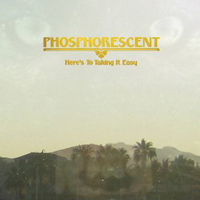
4 Phosphorescent – Here's To Taking It Easy
The Mermaid Parade is like a maritime version of Mardi Gras. Held on Coney Island every year on the Saturday nearest the beginning of Summer it is, according to the ever reliable Wikipedia, 'well-known for extraordinary marine costumes, and for the occasional partial nudity.' I had never heard of it until I read an article about Lou Reed and Laurie Anderson being the parade's King and Queen this year. It sounds like a blast.
About a week later I was listening to the iPod on shuffle and up popped a song which I didn't recognise, but it which was very definitely about the same event: 'Oh, but I didn't make it to the airport today / I wound up walking out by the ocean today / there were naked women dancing in the Mermaid Parade.' It was a beautifully yearning, melancholy waltz through the singer's calamitous love-life, which manages to create a whole history from a few beguilingly sketched incidents. Straight away I was intrigued. The track was by a band called Phosphorescent, which it turned out was really just a front for solo artist Matthew Houck. I also discovered that I had another track off the album – the tongue-in-cheek (I presume) It's Hard to Be Humble (When You're From Alabama), which I had listened to a couple of times and decided that I didn't like.
And that was almost that. Although I love The Mermaid Parade I presumed that it was a one-off and had pretty much decided that it wasn't worth investigating the rest of the album. How wrong can you be? It turns out that It's Hard to Be Humble (When You're From Alabama) is the exception and the rest of the album is as spectacularly good as The Mermaid Parade.
Houck's voice is instantly recognisable, bruised, world-weary and able to convey a depth of emotion with the slightest intonation. The album title is apt, because the music is mostly easy-going, deep-south rock'n'roll. There are jaunty numbers like Heaven, Sitting Down and I Don't Care if There is Cursing and darker, country and gospel tinged tracks like Los Angeles and Hej, Me I'm Light but all of the songs have a timeless, effortless grace.
The Mermaid Parade is like a maritime version of Mardi Gras. Held on Coney Island every year on the Saturday nearest the beginning of Summer it is, according to the ever reliable Wikipedia, 'well-known for extraordinary marine costumes, and for the occasional partial nudity.' I had never heard of it until I read an article about Lou Reed and Laurie Anderson being the parade's King and Queen this year. It sounds like a blast.
About a week later I was listening to the iPod on shuffle and up popped a song which I didn't recognise, but it which was very definitely about the same event: 'Oh, but I didn't make it to the airport today / I wound up walking out by the ocean today / there were naked women dancing in the Mermaid Parade.' It was a beautifully yearning, melancholy waltz through the singer's calamitous love-life, which manages to create a whole history from a few beguilingly sketched incidents. Straight away I was intrigued. The track was by a band called Phosphorescent, which it turned out was really just a front for solo artist Matthew Houck. I also discovered that I had another track off the album – the tongue-in-cheek (I presume) It's Hard to Be Humble (When You're From Alabama), which I had listened to a couple of times and decided that I didn't like.
And that was almost that. Although I love The Mermaid Parade I presumed that it was a one-off and had pretty much decided that it wasn't worth investigating the rest of the album. How wrong can you be? It turns out that It's Hard to Be Humble (When You're From Alabama) is the exception and the rest of the album is as spectacularly good as The Mermaid Parade.
Houck's voice is instantly recognisable, bruised, world-weary and able to convey a depth of emotion with the slightest intonation. The album title is apt, because the music is mostly easy-going, deep-south rock'n'roll. There are jaunty numbers like Heaven, Sitting Down and I Don't Care if There is Cursing and darker, country and gospel tinged tracks like Los Angeles and Hej, Me I'm Light but all of the songs have a timeless, effortless grace.
Wednesday, December 22, 2010
Top 10 albums of 2010
5 Mogwai – Special Moves
So starts eleven minutes forty-three seconds of the most glorious racket I guarantee you will hear for a long time. They sound so polite in the introduction: like a shy schoolboy chatting to his grandmother's best friend. Just you wait though. The build-up takes about five minutes during which they gradually get into a ferocious groove of drums and bass, with shards of guitar slashing and spinning over the top. Gradually fading back down again until you are left with the most delicate drum beat, a tiny throb of bass and the most exquisite wisps of guitar. About three and a half minutes later you are just adjusting the volume, so that you can catch all the subtleties, when everything explodes back into action destroying your speakers and necessitating a change of underwear. I can't count how many times I've listened to Mogwai Fear Satan, but it has caught me out every single bleeding time. And I still love it.
This is the fourth track into a recording made in Brooklyn (hence the Glasgow, Scotland) in April 2009. With some understated thank-yous they slip into a stunningly beautiful version of Cody, the only song with recognisable vocals in the whole concert, which feels a million times more exceptional because of the scouring and pummelling you've just been through. Imagine what the audience felt like ...
They build things up with the next three tracks, but not quite to the same levels as before, and then confound expectations with a surprisingly lovely version of 2 Rights Make 1 Wrong. The only other words from the stage – thanks for coming – and straight into the last two songs. Like Herod ends with a blizzard of feedback that makes you think it has to be the last song, but in fact resolves itself into a frantic and positively snappy Glasgow Megasnake which then ends as if lightning has just blown out the electrics. Special moves all right ...
'How're you doing? We're Mogwai from Glasgow, Scotland.
It's nice to be here.'
So starts eleven minutes forty-three seconds of the most glorious racket I guarantee you will hear for a long time. They sound so polite in the introduction: like a shy schoolboy chatting to his grandmother's best friend. Just you wait though. The build-up takes about five minutes during which they gradually get into a ferocious groove of drums and bass, with shards of guitar slashing and spinning over the top. Gradually fading back down again until you are left with the most delicate drum beat, a tiny throb of bass and the most exquisite wisps of guitar. About three and a half minutes later you are just adjusting the volume, so that you can catch all the subtleties, when everything explodes back into action destroying your speakers and necessitating a change of underwear. I can't count how many times I've listened to Mogwai Fear Satan, but it has caught me out every single bleeding time. And I still love it.
This is the fourth track into a recording made in Brooklyn (hence the Glasgow, Scotland) in April 2009. With some understated thank-yous they slip into a stunningly beautiful version of Cody, the only song with recognisable vocals in the whole concert, which feels a million times more exceptional because of the scouring and pummelling you've just been through. Imagine what the audience felt like ...
They build things up with the next three tracks, but not quite to the same levels as before, and then confound expectations with a surprisingly lovely version of 2 Rights Make 1 Wrong. The only other words from the stage – thanks for coming – and straight into the last two songs. Like Herod ends with a blizzard of feedback that makes you think it has to be the last song, but in fact resolves itself into a frantic and positively snappy Glasgow Megasnake which then ends as if lightning has just blown out the electrics. Special moves all right ...
Tuesday, December 21, 2010
Top 10 albums of 2010
6 Rose Elinor Dougall – Without Why
Eleven sparky, quirky pop songs. In a world of X Factor and sausage factory, manufactured pop music it is great to find an album like this can even still exist.
I don't know much about her previous existence as one-third of The Pipettes and came to the single Find Me Out with no real expectations. It is a lovely melancholy, string-driven tune and the way she sings 'my cerebral faculties overloaded' would charm the hardest heart. The rest of the album is mostly more up-tempo, but the lyrics are always intelligent and interesting and she has a gift for matching them with catchy tunes and an idiosyncratic range of instrumentation.
Occasionally it can get a bit polite and not spontaneous enough, but it is undoubtably a well crafted bunch of pop songs which makes you happier to have heard them. And sometimes that's enough, more than enough.
Eleven sparky, quirky pop songs. In a world of X Factor and sausage factory, manufactured pop music it is great to find an album like this can even still exist.
I don't know much about her previous existence as one-third of The Pipettes and came to the single Find Me Out with no real expectations. It is a lovely melancholy, string-driven tune and the way she sings 'my cerebral faculties overloaded' would charm the hardest heart. The rest of the album is mostly more up-tempo, but the lyrics are always intelligent and interesting and she has a gift for matching them with catchy tunes and an idiosyncratic range of instrumentation.
Occasionally it can get a bit polite and not spontaneous enough, but it is undoubtably a well crafted bunch of pop songs which makes you happier to have heard them. And sometimes that's enough, more than enough.
Monday, December 20, 2010
Top 10 albums of 2010
7 Arcade Fire – The Suburbs
Neon Bible was far more angry, raging about all the injustices in the world and much of it seems to be about the fears and paranoia of parenthood. I remember when it first came out, listening to it just after an apocalyptic Melbourne heat-wave which was full of bushfires, power cuts and the fury of the Australian landscape. Needless to say, it seemed to make perfect sense and I enjoyed it immensely at the time, but unsurprisingly it isn't really an album that I return to much. It is just too histrionic and off-kilter to be a satisfying and enjoyable listen.
Third album The Suburbs takes us back to childhood again, but this time it seems to be a very specific teenage period between about 13 or 14 and leaving home, unlike the stories on Funeral which come from an earlier and younger, more innocent time. It is beautifully done, looking back with a genuine, but clear sighted fondness for this phase in life, without being nostalgic. The balance between the music and the lyrics is perfect, and as a recreation of a specific time and place you would be hard pushed to come up with any better examples in any musical genre.
The two standout tracks for me, which have presumably already attained modern classic status – Half Life I and Sprawl II (Mountains Beyond Mountains) – are surprisingly reminiscent of my two favourite songs on Funeral – Wake Up and In the Backseat – appearing at similar points in the track listing and showcasing all the best facets of their craft. It would have been higher up in my list, but for the fact they try to cram too much in and consequently the quality control slips up and lets a couple of howlers like Rococo and Month of May through.
Anyway, no matter where you grew up (small town not the suburbs for me), it will bring back all those wonderful teenage memories and show how reassuringly universal the experience is.
Arcade Fire's first album Funeral was, as the name suggests, mainly about death. But it wasn't about fear of dying, it was about dealing with the death of close friends and family and how the flipside of grief is joy at still being alive. It was also about childhood memories and the myths and legends that everyone creates and carries with them from this time.
Neon Bible was far more angry, raging about all the injustices in the world and much of it seems to be about the fears and paranoia of parenthood. I remember when it first came out, listening to it just after an apocalyptic Melbourne heat-wave which was full of bushfires, power cuts and the fury of the Australian landscape. Needless to say, it seemed to make perfect sense and I enjoyed it immensely at the time, but unsurprisingly it isn't really an album that I return to much. It is just too histrionic and off-kilter to be a satisfying and enjoyable listen.
Third album The Suburbs takes us back to childhood again, but this time it seems to be a very specific teenage period between about 13 or 14 and leaving home, unlike the stories on Funeral which come from an earlier and younger, more innocent time. It is beautifully done, looking back with a genuine, but clear sighted fondness for this phase in life, without being nostalgic. The balance between the music and the lyrics is perfect, and as a recreation of a specific time and place you would be hard pushed to come up with any better examples in any musical genre.
The two standout tracks for me, which have presumably already attained modern classic status – Half Life I and Sprawl II (Mountains Beyond Mountains) – are surprisingly reminiscent of my two favourite songs on Funeral – Wake Up and In the Backseat – appearing at similar points in the track listing and showcasing all the best facets of their craft. It would have been higher up in my list, but for the fact they try to cram too much in and consequently the quality control slips up and lets a couple of howlers like Rococo and Month of May through.
Anyway, no matter where you grew up (small town not the suburbs for me), it will bring back all those wonderful teenage memories and show how reassuringly universal the experience is.
Sunday, December 19, 2010
Top 10 albums of 2010
8 Efterklang – Magic Chairs
I have always had a soft spot for Scandinavian pop and rock. I believe it can be traced back to Abba's The Album in 1977, but over the years it has encompassed a variety of bands, styles and genres (almost everything apart from Norwegian death metal). Most recently it has been The Concretes, Hello Saferide, Sambassadeur, Casiokids, Slaraffenland, The Shout out Louds and now Efterklang. And that's without even counting all the Icelandic nut jobs.
Efterklang are Danish, but seem to sing mostly in English, and they make a wonderfully bizarre mix of post-rock, electronica and chamber pop (not sure if that is a real genre or possibly I just made it up). There are trumpets, strings, gentle ebbs and flows, and moments of whimsy, drama and urgency. A bit serious at times, but never overthought or emotionless. It is hard to find any other band to compare them to and I guess that is a major part of their charm. For Magic Chairs, their third album, they signed to 4AD which is probably the most helpful piece of information I can give to explain what they sound like.
The album starts with Modern Drift – rolling piano high notes, a bit of cello, the drums kick and then fade out. This repeats for a couple of times before everything locks into a lolloping groove, powered along by strings and a chugging trumpet. Alike is more restrained, but with a joyous refrain of 'and it made us feel alike,' which I always mis-hear as 'and it made us feel alive' and some wonderfully improbable wooo-oo-hoos. It's probably my favourite track on the album.
I was Playing Drums runs on a stuttering, sliding bass riff that underpins an eerie story about machines, monsters and faded polaroids. Then sliding into Raincoats and onwards through another seven tracks to end up with the easy going The Dream in Which I Flee it is an album of lush, stately, fascinating music that keeps revealing its treasures and surprises over many listens.
I have always had a soft spot for Scandinavian pop and rock. I believe it can be traced back to Abba's The Album in 1977, but over the years it has encompassed a variety of bands, styles and genres (almost everything apart from Norwegian death metal). Most recently it has been The Concretes, Hello Saferide, Sambassadeur, Casiokids, Slaraffenland, The Shout out Louds and now Efterklang. And that's without even counting all the Icelandic nut jobs.
Efterklang are Danish, but seem to sing mostly in English, and they make a wonderfully bizarre mix of post-rock, electronica and chamber pop (not sure if that is a real genre or possibly I just made it up). There are trumpets, strings, gentle ebbs and flows, and moments of whimsy, drama and urgency. A bit serious at times, but never overthought or emotionless. It is hard to find any other band to compare them to and I guess that is a major part of their charm. For Magic Chairs, their third album, they signed to 4AD which is probably the most helpful piece of information I can give to explain what they sound like.
The album starts with Modern Drift – rolling piano high notes, a bit of cello, the drums kick and then fade out. This repeats for a couple of times before everything locks into a lolloping groove, powered along by strings and a chugging trumpet. Alike is more restrained, but with a joyous refrain of 'and it made us feel alike,' which I always mis-hear as 'and it made us feel alive' and some wonderfully improbable wooo-oo-hoos. It's probably my favourite track on the album.
I was Playing Drums runs on a stuttering, sliding bass riff that underpins an eerie story about machines, monsters and faded polaroids. Then sliding into Raincoats and onwards through another seven tracks to end up with the easy going The Dream in Which I Flee it is an album of lush, stately, fascinating music that keeps revealing its treasures and surprises over many listens.
Song for Sunday
Circle Pit – Another Trick
Band/artist of the week: The Rural Alberta Advantage
Song of the week: Laura Marling – Rambling Man
Saturday, December 18, 2010
Top 10 albums of 2010
9 Laura Marling – I Speak Because I Can
I know, I know: now we are a day behind and I will have to slot two entries into one day. Blame work and a more enjoyable Christmas party than expected ...
There seems to have been a lot of folk music around this year. Normally I wouldn't notice, especially from this far away in the antipodes, and would be unlikely to care. Mostly I react to folk music with an instinctive suspicion, but then actually quite enjoy a very small proportion of what I am reluctantly exposed to. Usually it just isn't noisy or tuneful enough for me, but every so often I find something or, in this case, someone that torpedos all those preconceptions.
Laura Marling seems to have suffered a bit of a backlash in a lot of the end-of-year best-ofs, mainly I suspect because people are embarrassed by how much they hyped her at the beginning of the year. The funny thing is that it is a brilliant album and outstanding by the standards of any genre. Her songwriting is fantastic and, more unexpected for me, the melody and arrangements are wonderful with piano, strings and full on rhythm section on some tracks.
The faintly sinister and foreboding Alpha Shallows ('the grey in this city is too much to bear and I believe we are meant to be seen and not to be understood ... and I want to be held by those arms') was my hook into the album, followed by the plaintive voice and soaring chorus on Rambling Man ('oh give me to the rambling man, let it always be known that I was who I am'), and on through the beautiful Goodbye England (Covered in Snow) into the enticing depths surrounding.
And the best bit? The louder you play it, the better it gets.
I know, I know: now we are a day behind and I will have to slot two entries into one day. Blame work and a more enjoyable Christmas party than expected ...
There seems to have been a lot of folk music around this year. Normally I wouldn't notice, especially from this far away in the antipodes, and would be unlikely to care. Mostly I react to folk music with an instinctive suspicion, but then actually quite enjoy a very small proportion of what I am reluctantly exposed to. Usually it just isn't noisy or tuneful enough for me, but every so often I find something or, in this case, someone that torpedos all those preconceptions.
Laura Marling seems to have suffered a bit of a backlash in a lot of the end-of-year best-ofs, mainly I suspect because people are embarrassed by how much they hyped her at the beginning of the year. The funny thing is that it is a brilliant album and outstanding by the standards of any genre. Her songwriting is fantastic and, more unexpected for me, the melody and arrangements are wonderful with piano, strings and full on rhythm section on some tracks.
The faintly sinister and foreboding Alpha Shallows ('the grey in this city is too much to bear and I believe we are meant to be seen and not to be understood ... and I want to be held by those arms') was my hook into the album, followed by the plaintive voice and soaring chorus on Rambling Man ('oh give me to the rambling man, let it always be known that I was who I am'), and on through the beautiful Goodbye England (Covered in Snow) into the enticing depths surrounding.
And the best bit? The louder you play it, the better it gets.
Subscribe to:
Posts (Atom)